



Firstly, let's take a look at what tire screws are and their functions. Tire screws refer to the screws installed on the wheel hub, connecting the wheel,
brake disc (brake drum), and wheel hub. Its function is to reliably connect the wheels, brake discs (brake drums), and wheel hubs together. As we all
know, the weight of a car is ultimately borne by its wheels, and the connection between the wheels and the body is achieved through these screws. So,
these tire screws actually bear the weight of the entire vehicle and also transmit the torque output by the gearbox to the wheels, which are subjected to
both tensile and shear forces during operation.
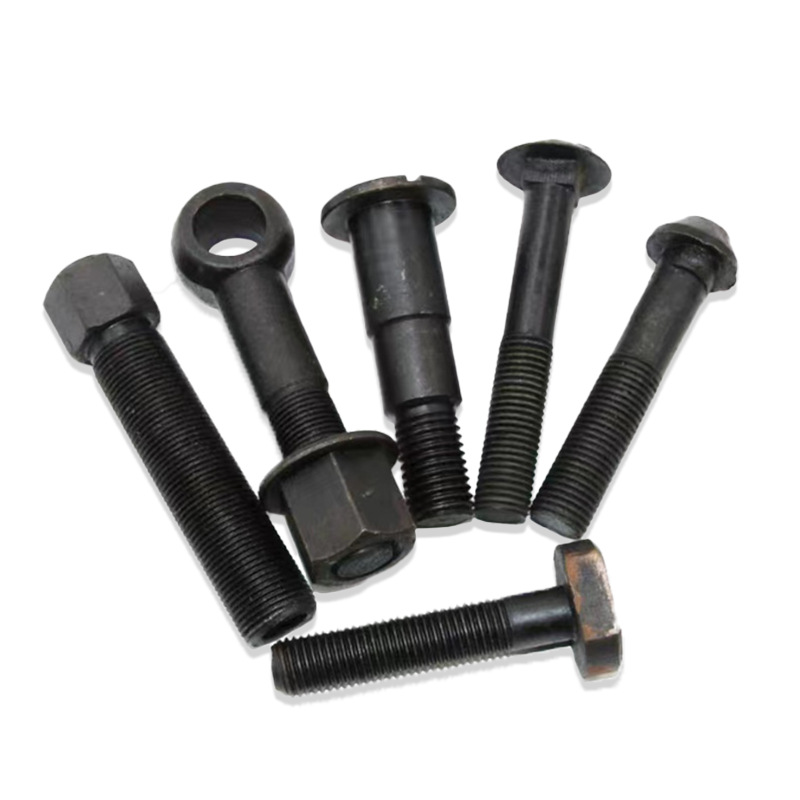
The structure of tire screws is very simple, consisting of screws, nuts, and washers. According to the different screw structures, it can also be divided
into single head bolts and double head bolts. Nowadays, the vast majority of cars use single head bolts, while double head bolts are generally used in
small and medium-sized trucks. There are two installation methods for single head bolts, one is wheel hub bolts and nuts. The bolts are fixed on the
wheel hub with interference fit, and then the wheels are fixed with nuts. This method is commonly used in Japanese and Korean cars, and the vast
majority of trucks also use it. The advantage of this method is that the wheels are relatively easy to locate and disassemble, with high safety. The
disadvantage is that replacing tire screws is more complicated, and some require disassembling the wheel hub; Another type is the wheel fixing bolt,
which is directly threaded onto the wheel hub and the tire screw is directly screwed onto the wheel hub. It is generally used more in small European and
American cars. The advantage of this method is that it is relatively easy to disassemble and replace the tire screws, but the disadvantage is that the
safety is slightly lower. If the tire screws are repeatedly disassembled, it will damage the threads on the wheel hub, and the wheel hub must be replaced.
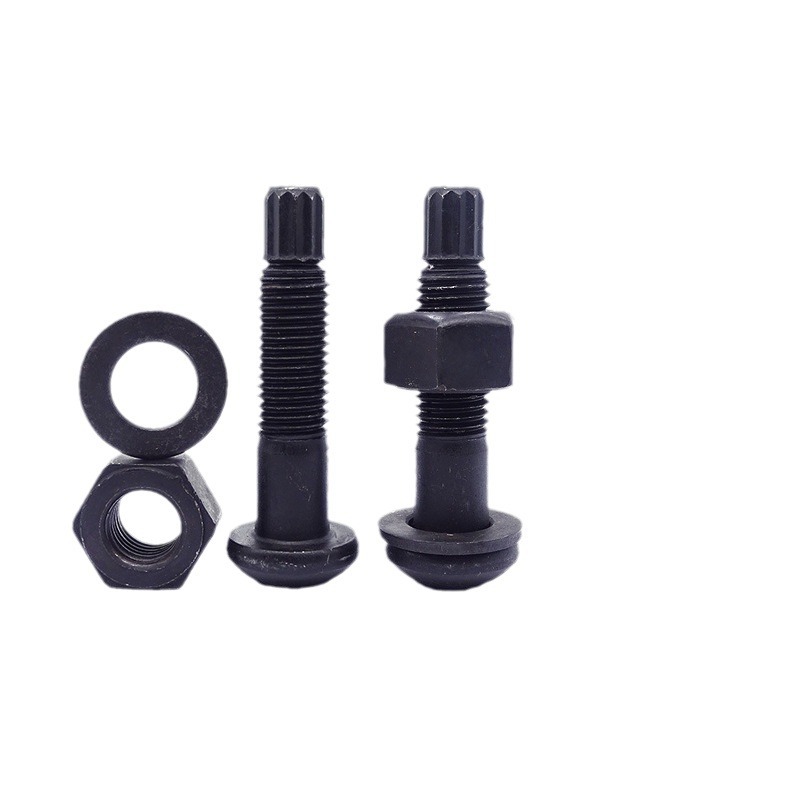 Car tire screws are generally made of
high-strength steel, and the head of the tire screw is printed with the strength grade of the screw, which includes 8.8, 10.9, and 12.9. The higher the
value, the higher the strength. Here, 8.8, 10.9, and 12.9 refer to the performance grade labels of bolts, consisting of two parts of numbers representing
the nominal tensile strength value and yield strength ratio of the bolt material, usually represented by "X.Y", such as 4.8, 8.8, 10.9, 12.9, and so on. The
tensile strength of bolt with performance level 8.8 is 800MPa, the yield strength ratio is 0.8, and the yield strength is 800 × 0.8=640MPa; The bolt with a
performance level of 10.9 has a tensile strength of 1000MPa, a yield strength ratio of 0.9, and a yield strength of 1000 × 0.9=900MPa. And so on for
others. Generally, bolts with a strength of 8.8 or above, made of low-carbon alloy steel or medium carbon steel, and heat-treated are referred to as high-
strength bolts. The tire screws of cars are all high-strength bolts, and the strength of the matching bolts varies depending on the vehicle model and load
capacity. 10.9 is the most common, 8.8 is generally matched with lower end vehicle models, and 12.9 is generally matched with heavy-duty trucks.
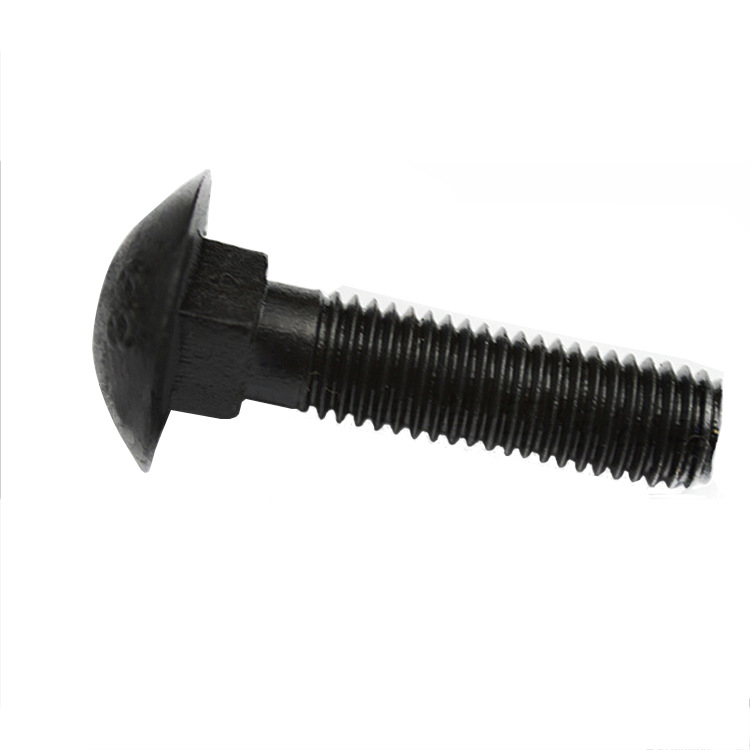
In addition, when tightening tire screws, try not to use air cannons. These air cannons usually have excessive torque, which can cause the tire screws to
stretch, even to the yield point of the tire screws, resulting in irreversible plastic deformation of the tire screws. Such tire screws can no longer be
tightened and must be replaced. Also, do not repeatedly disassemble and assemble tire screws. Each disassembly and assembly is a damage to the
thread, and the friction between the bolt and nut will become smaller and smaller. The self-locking effect of the bolt will weaken or even disappear, and
the tire screws will not be able to tighten. Generally, it is recommended to replace tire screws that have been disassembled and assembled more than
ten times. Also, do not apply butter on the tire screws. Although it will make disassembly easier in the future, butter will reduce the friction between the
threads, decrease the self-locking effect of the screws, and increase the possibility of screw loosening.