Fastener knowledge:
Working principle of hydraulic nuts, Shuifu Hanyang Machinery Technology Co., Ltd. will take you to understand
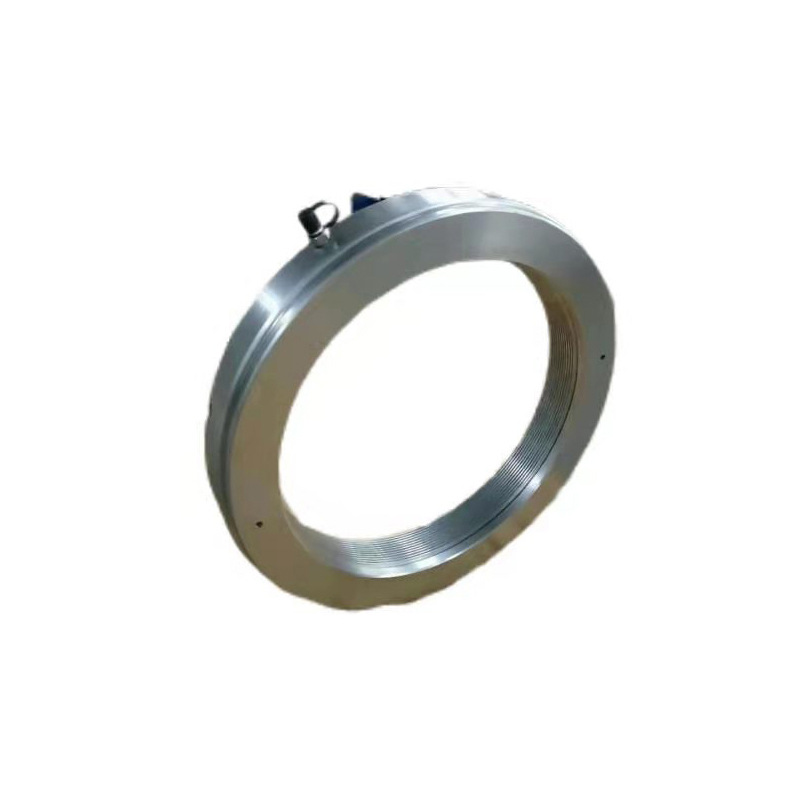
The hydraulic nut is simply a piston used to drive the bearing to push the tapered shaft or separation sleeve upwards along the axial direction. Due to
the almost incompressible nature of hydraulic fluid, it flows into the area behind the piston after being introduced into the nut, pushing the piston out.
Many different installation and disassembly methods for tapered bore bearings use this pressure. The diameter of the hole suitable for hydraulic nuts is
approximately 50mm or more.
The working principle of hydraulic nuts is to use ultra-high pressure oil to generate a thrust on the shaft and a tension on the shaft sleeve, so that the
shaft and shaft sleeve are uniformly connected under force.
There are several ways to install bearings using hydraulic nuts. Both the tightening sleeve and the retraction sleeve can be used. Larger hydraulic
tightening and release sleeves (approximately size 26 and above) may also have conduits to reduce friction when installing bearings on larger
equipment. Pay attention to the good condition of the hydraulic system and ensure that there are no leaks.
Instructions and precautions for using hydraulic nuts:
1. Fill the manual pump with hydraulic oil before use, with the oil injection port at the rear end of the manual pump. Open the nut to inject oil and lock it
after injection. When applying pressure, press the handle above the pump up and down, and lock the unloading switch handle on the right side of the
pump clockwise; Rotate the handle counterclockwise to relieve pressure. The left side is connected to a pressure gauge, which can observe the
pressure indication during pressurization. The front end of the manual pump is connected to an oil hose.
2. The hydraulic nut consists of a nut body, a pressure ring, an oil injection port, and an oil discharge and exhaust joint. When using, clean the
appearance of the nut. Screw the nut into the workpiece and lock the nut. The pressure ring should be in its original position. Then, insert the oil
injection hose interface of the manual pump into the oil injection port, lock the unloading switch handle on the right side of the manual pump, and
slowly apply pressure. At the same time, turn the air release cap on the upper part of the oil discharge and exhaust joint inward to release air until the
air inside the nut is completely discharged. After clean hydraulic oil flows out, loosen the air release cap outward to close the one-way valve. Continue
to apply pressure and inject oil, so that the pressure ring can be pressed outward to achieve the desired compression effect. Apply pressure until the
desired compression effect is achieved. Release the unloading switch handle and loosen the pressure hose connector of the manual pump.
3. Loosen the nut and rotate the oil discharge and exhaust joint inward until the hydraulic oil flows out, then slowly loosen the nut.
4. Before tightening the nut into the workpiece, please do not apply pressure to the nut to prevent the pressure ring from being biased and dislodged.
When not in use, please drain the oil from the nut and return the pressure ring to its original position for future use. Add butter to the threads to prevent
rusting.