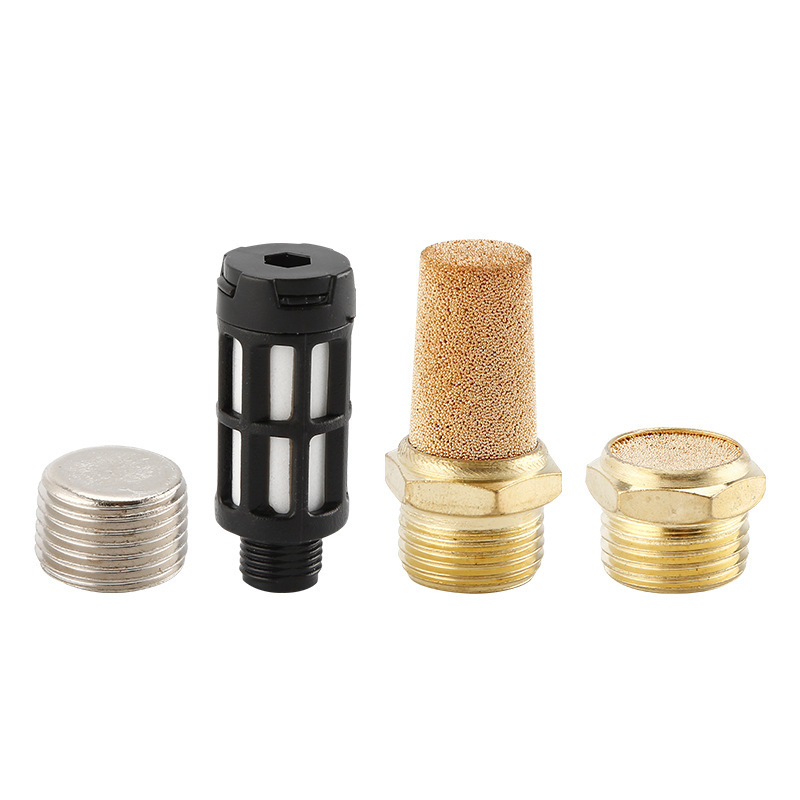
Resistive muffler
The working principle is to use sound-absorbing cotton to absorb sound. As the name suggests, sound obstruction is achieved by
filling the muffler with porous sound-absorbing materials, converting sound energy into internal energy, and consuming this energy. However, it has
better high-frequency sound-absorbing effect than low-frequency sound-absorbing effect. Why is that? It can be thought that high frequencies can
eliminate the majority, while low frequencies are already few and have poor results. I think if you want to block the low-frequency part, you can add
more sound-absorbing cotton, but there are limitations to the addition of sound-absorbing cotton. Commonly found in mid section mufflers and tail
section straight exhaust mufflers, resistive mufflers mainly work at mid to high frequencies.
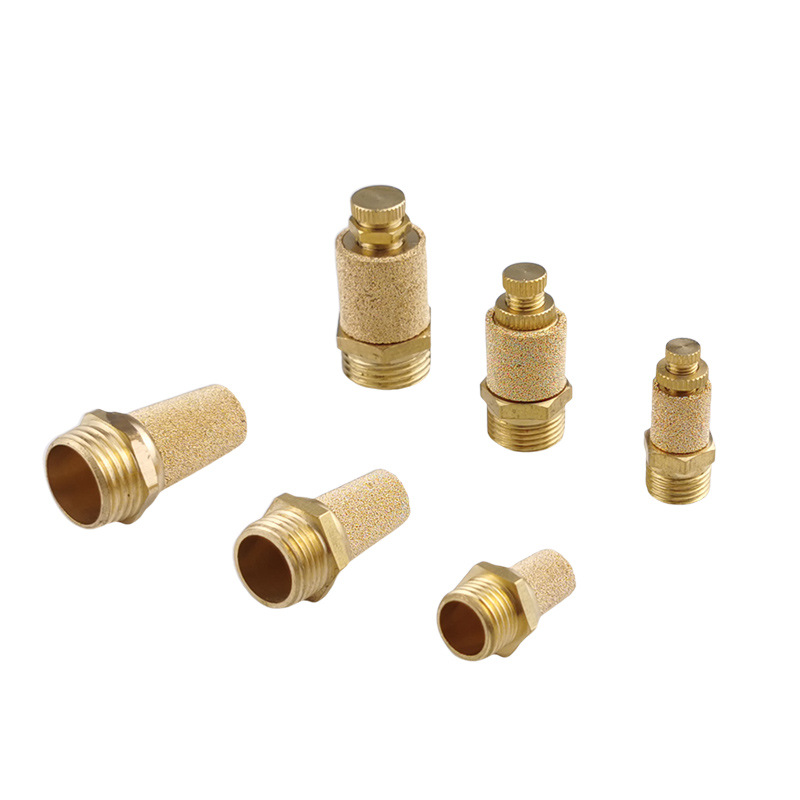
Resistance muffler
As the name suggests, the principle of mutual resistance is used to eliminate fluctuations and resistance. Resistance muffler (also
known as reflective type) is mainly composed of partitions and expansion chambers. Generally, a muffler has three expansion chambers of varying
sizes. By utilizing exhaust gases to reflect and interfere with each other (friction) in these chambers, the soundproofing effect is achieved. The noise
suppression effect on medium and low frequencies is very significant. By using methods such as drilling and disconnecting pipelines to create
structural discontinuities, sound is reflected back at these discontinuous structures, thereby achieving the goal of reducing sound. Resistance mufflers
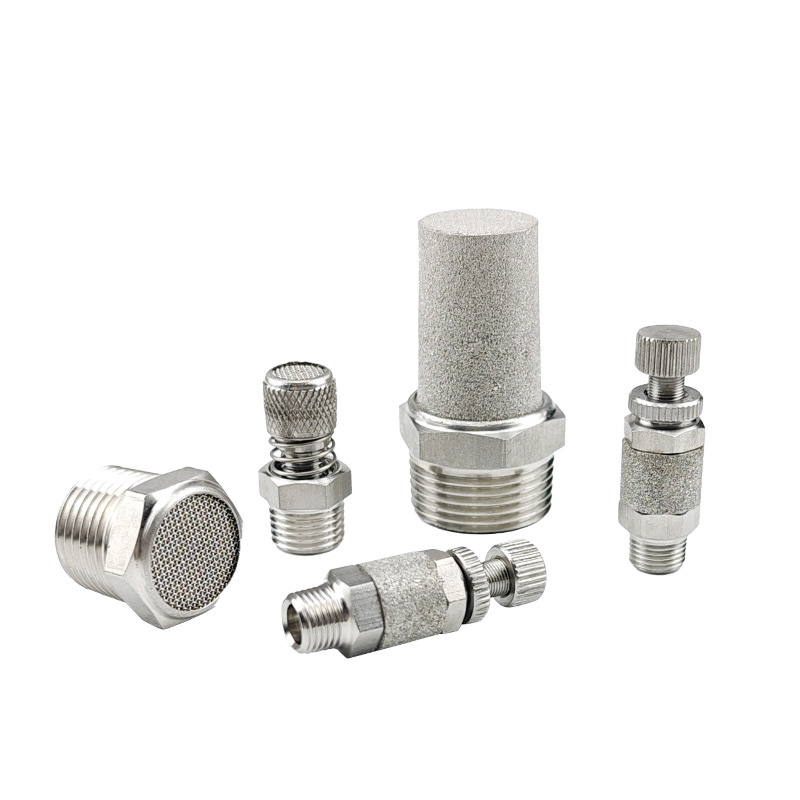
mainly work at mid to low frequencies.
Composite muffler: a combination of resistive and resistant mufflers that can achieve noise reduction across all frequency ranges. However, most
people often confuse airflow with sound, thinking that changing the direction of airflow can change sound, which is not entirely correct. For example, in
the resistive muffler shown in the figure, due to the blocking effect of the sound-absorbing cotton, most of the airflow flows along the inner tube, while a
portion of the sound can easily penetrate through the holes on the inner tube and be absorbed by the sound-absorbing cotton quilt. If the diameter of
the outer shell of the resistive muffler is increased sufficiently, the airflow will still flow along the inner tube, but basically all the sound will be absorbed
by the sound-absorbing cotton. Therefore, even if it is directly discharged, it can eliminate some noise.
Exhaust resonance
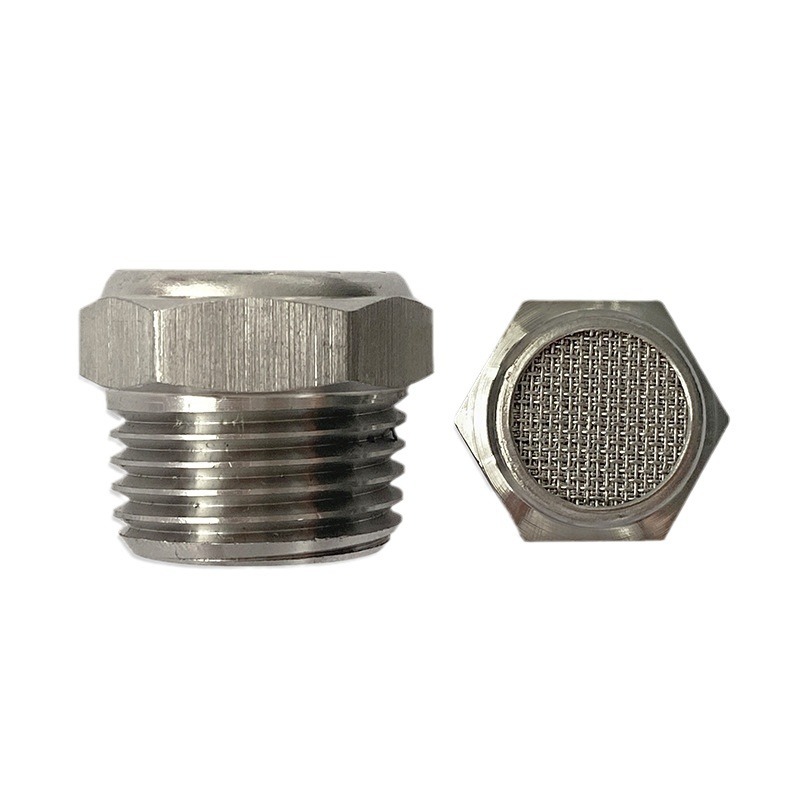
Exhaust resonance can be divided into two types: acoustic resonance (also known as resonance) and vibrational resonance. The vibration of the
exhaust pipe is caused by the vibration generated by the engine operation (which can be referred to as the sound source). A corrugated pipe can be
installed at the connection to reduce the vibration transmitted to the middle and tail sections, which is equivalent to a spring damping system. A well-
designed corrugated pipe can attenuate most of the vibrations propagating along the exhaust pipe.
Any object has a fixed vibration frequency, and exhaust pipes are no exception. In addition, the vibration magnitude of each part of the object also
follows a regular pattern, with some areas consistently experiencing small vibrations and others consistently experiencing large vibrations. When fixing
the muffler in the equation, we should also find the right position and not place it in a place with high vibration (such as the rear compartment of the
FSCC racing car). We can also install a corrugated pipe between the exhaust manifold and the muffler to attenuate the vibration frequency and change
the natural vibration frequency of the exhaust pipe. And the vibration of exhaust noise will be amplified and driven by the frame to vibrate the entire
vehicle. When the frequencies of two vibration functions are the same, their amplitudes will superimpose, thus amplifying the vibration. So when
installing a muffler, it is also necessary to find a suitable position.
The resonance of sound requires a medium for the propagation of vibration. Vibration resonance is caused by the match between the vibration of the
engine and the inherent characteristics of the exhaust pipe structure. The medium for the propagation of exhaust sound waves is air, so the resonance
of sound is caused by the match between the exhaust sound waves of the engine and the inherent characteristics of the air in the exhaust pipe. During
the propagation of exhaust sound waves, standing waves will form inside the exhaust pipe. Similar to the difference in vibration magnitude at different
positions of the exhaust pipe, the size of the sound inside the exhaust pipe also varies due to the presence of standing waves. Usually, the lowest point
of the sound is located at the pipe break point inside the muffler, and the number and position of the highest point of the sound vary depending on the
frequency of the sound. The highest point of sound in standing wave 1 is located between the two mufflers, while the frequency of standing wave 2 is
twice that of standing wave 1. When the frequency of the exhaust sound wave of the engine matches the frequency of the standing wave of the
connecting pipe, resonance of the sound occurs. Resonance also means that the vibration will be amplified.