



Self-tapping screw specifications
The specifications of self-tapping screws are usually described by three parameters: screw diameter series, number of threads per inch and screw length. The specifications of self-tapping screws can be divided into the following categories:
1. Screw diameter series:
Common screw diameter grades include grade 10 and grade 12, and the corresponding screw diameters are 4.87mm and 5.43mm respectively.
Common thread specifications in the national standard range from ST2.2 to ST9.5.
2. Number of threads per inch of length:
There are three levels of threads per inch: 14, 16, and 24. The more threads, the stronger the self-drilling ability.
3.Screw length:
The screw length is usually measured in millimeters. Common length series include 4.5, 6.5, 9.5, 13, 16, 19, 22, 25, 32, 38, 45, 50, etc.
In addition, the material and strength grade of self-tapping screws are also factors that need to be considered when selecting. For example, common materials include stainless steel (such as 304 stainless steel) and galvanized steel, and the strength grade is usually A2-70.
Specific examples of self-tapping screw specifications are as follows:
·M3*35mm: The nominal diameter is 3mm, the length is 35mm, and the material is stainless steel.
ST3.5*16mm: The thread specification is ST3.5 and the length is 16mm. It is usually used for fixing metal sheets.
M4*30mm: The nominal diameter is 4mm, the length is 30mm, and the material is stainless steel or galvanized steel.
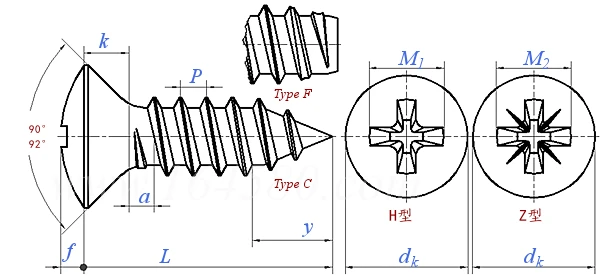

Key features of our self-tapping screws
1. No need to pre-punch or tap holes: Self-tapping screws have a pointed design and can cut holes that fit their own threads by themselves, and are suitable for non-metallic or soft metal materials.
2. Strong corrosion resistance: Even in outdoor humid and cold environments, self-tapping screws show strong corrosion resistance.
3. Strong self-drilling ability: The key to the quality of self-tapping screws lies in three aspects: screw diameter series, number of external threads, and total length of the screw rod. The greater the number of external threads, the stronger the self-drilling ability.
4. Simplify the installation process: Since there is no need to drill or tap holes in advance, self-tapping screws simplify the installation process and shorten the construction period. They are especially suitable for materials whose backside cannot be accessed.
5. Various head shapes and materials: Self-tapping screws have various head shapes, including round heads, oblate heads, hexagonal heads, etc. The materials are mainly carburized steel and stainless steel, and the surface is usually electroplated.
Applications of self-tapping screws
Self-tapping screws are fasteners that can be screwed directly into materials to form threads without pre-drilling or tapping. They are widely used in many fields. The following are the main applications of self-tapping screws:
1. Construction industry: Self-tapping screws are used in construction projects to join metal, wood and plastic materials. For example, they are used to fix thin plate parts such as color steel plates, purlins, and wall beams, as well as to fasten various components during building construction and installation.
2. Furniture manufacturing: Self-tapping screws simplify the furniture assembly process, especially in furniture made of multiple materials, such as cabinets, furniture frames, etc. in woodworking projects.
3. Automobile manufacturing and repair: Self-tapping screws are used in vehicle assembly and repair work, especially where quick and secure connections are 1. Electronic products: Self-tapping screws are used to fix components and casings in electronic equipment, because they do not require pre-drilling, simplifying the installation process.
4.DIY projects:DIY enthusiasts often use self-tapping screws for home decoration projects, such as carpentry, decoration, etc., because they are easy to install and efficient.
5.Metalworking and sheet metal applications: Self-tapping screws are widely used in metalworking and sheet metal applications, such as projects in HVAC systems, automotive repairs or electrical enclosures, to provide safe and efficient fastening solutions.
6. Plastic and composite material applications: Self-tapping screws are also suitable for fastening plastic and composite materials, such as plastic casings, electrical accessories or composite structures, etc. to ensure a firm connection without damaging the material.
7. Medical field: Self-tapping screws are also used in the medical field, such as dental implants and orthopedic screws. These applications require high precision and stability.
8. Other industrial applications: Self-tapping screws are also used in equipment maintenance and viaduct bridge construction in light and heavy industries because they can quickly complete installation and provide high-strength connections.
|
Self tapping screw type |
Material |
application |
How to use |
|
self-cutting self-tapping screws |
Stainless steel |
Plastics, asbestos products, aluminum, zinc, lead die castings, thin steel plates and sections, cast iron, brass |
After drilling the test hole, use a power drill or screwdriver to slowly insert the screw into the material. |
|
Drill tail self-tapping screws |
Stainless steel |
Furniture fixation, architectural decoration, steel structure connection, as well as industrial equipment, home appliances, automobiles, ships and aviation |
Use an electric drill to drill the screws into the material |
|
Flat head self-tapping screws |
Stainless steel |
Electrical equipment, electronic machinery, household appliances, digital products, water conservancy projects and decoration construction |
Use an electric drill to drill the screws into the material |
|
Custom self-tapping screws |
Customizable materials |
Professional application |
Tailored to application |
Detailed description
Self-cutting and self-tapping nails:
lApplication: Plastics, asbestos products, die castings of aluminum, zinc, lead, thin steel plates and shaped steel, cast iron, brass
lInstallation method: After drilling the test hole, use a power drill or screwdriver to slowly insert the screw into the material, and finally check whether it is loose.
lAdvantages: No drilling required, efficient and fast, economical, sturdy and reliable, wide range of use.
Drill tail self-tapping screws:
lApplication: furniture fixation, architectural decoration, steel structure connection, as well as industrial equipment, home appliances, automobiles, ships and aviation.
lInstallation method: Use an electric drill to drill the screws into the material.
lAdvantages: high construction efficiency, strong connection strength, excellent corrosion resistance, beautiful appearance, and favorable price.
Flat head self-tapping screws:
Application: Electrical equipment, electronic machinery, household appliances, digital products, water conservancy projects and decoration construction.
Installation method: Use an electric drill to drill the screws into the material.
Advantages: strong corrosion resistance, low screwing torque and high locking performance, no need to pre-process screw holes, tensile strength
Custom self-tapping screws:
lApplication: Designed for specialized applications requiring unique specifications.
lInstallation method: Customized installation according to specific application requirements.
lBenefits: Customized specifications to meet unique project needs, ensuring optimal performance.
Customization options:
Custom Sizes: We offer bolts in standard and custom sizes to meet specific project requirements. Our advanced processing capabilities ensure a perfect fit for your application.
Material Selection: Depending on the application and environmental conditions, we offer screws made of stainless steel, galvanized steel, carbon steel and other specialty materials.
Surface Treatments: For enhanced corrosion resistance and durability, we offer a variety of surface treatments including galvanized, galvanized and custom coatings.
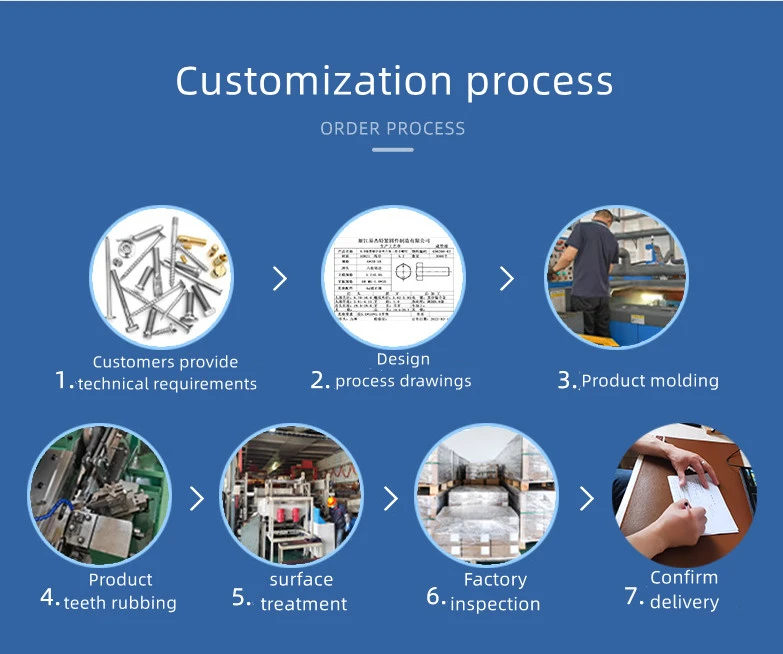
Production process of self-tapping screws
1. Material selection: Select appropriate materials based on required strength and environmental conditions.
2. Cutting: Cut the material into the desired shape and size.
3. Forging: Using high-pressure machinery to shape the bolts.
4. Threads: Create precise threads to ensure secure fastening.
5. Heat treatment: Enhance the strength and durability of bolts.
6. Surface treatment: Apply anti-corrosion coating.
7. Quality inspection: Ensure that each bolt meets strict quality standards.
8. Packaging: Pack completed bolts for shipment.
Global standards for self-tapping screws
The global standards for self-tapping screws are mainly formulated by the International Organization for Standardization (ISO), and there are also corresponding national standards in various countries. Here are details about global standards for self-tapping screws:ISO
1.ISO 10666: Applicable to self-drilling and self-tapping screws, specifying their mechanical and functional properties.
2.ISO 14585: Specifies the characteristics of self-tapping screws with hexagonal spline heads, thread sizes ST2.9 to ST6.3.
3.ISO 14586: Specifies the characteristics of self-tapping screws with hexagonal splines and countersunk heads, thread sizes ST2.9 to ST6.3.
4. ISO 15480: Applicable to hexagonal flange self-drilling and tapping screws, stipulating technical conditions such as thread specifications, nominal length and surface treatment.:
Common pairings of self-tapping screws
Common pairings of self-tapping screws include ordinary self-tapping screws, self-cutting self-tapping screws, self-drilling self-tapping screws, etc., and combination self-tapping screws that are combined with flat washers and elastic washers (such as spring washers and elastic lock washers).