



Specifications of popular rivets
The specifications of popular rivets mainly include the following types:
Solid rivets: Common specifications are 3.2mm, 4.0mm, 4.8mm, 6.4mm, etc. Solid rivets are suitable for joining thin and thick plates, as well as joining plates of different materials.
Hollow rivets: The specifications are the same as solid rivets, and the common ones are 3.2mm, 4.0mm, 4.8mm, 6.4mm, etc. Because the center of the shaft is hollow, hollow rivets are lighter and can withstand greater tensile force. They are suitable for connecting thin plates and thin-walled materials.
Semi-hollow rivets: The specifications are the same as solid rivets, and the common ones are 3.2mm, 4.0mm, 4.8mm, 6.4mm, etc. Semi-hollow rivets are suitable for connecting workpieces with thicker materials.
Sealing rivets: The specifications are the same as solid rivets, and the common ones are 3.2mm, 4.0mm, 4.8mm, 6.4mm, etc. Sealing rivets are suitable for applications that require waterproofing or sealing, such as automobiles, electrical appliances, ships and other industries.
Expansion rivets: The specifications are the same as solid rivets, and the common ones are 3.2mm, 4.0mm, 4.8mm, 6.4mm, etc. Expanding rivets are suitable for joining irregularly shaped materials.
Structural rivets: Common specifications are 4.0mm, 4.8mm, 6.4mm, 8.0mm, etc. Structural rivets are suitable for occasions that need to withstand large tensile forces, such as bridges, buildings, etc.
Rivets in clothing design: The commonly used sizes are between 0.4-1cm, of which 0.7-1cm is the most common and often used for decoration next to jeans pockets.Rivets of these specifications are widely used in industrial and fashion designs. Choosing the right rivet can improve the strength and durability of the workpiece, while also meeting specific design needs.
·All sizes above are in stock. Fast delivery and shipped in bulk. Custom rivets can be produced overnight if needed.
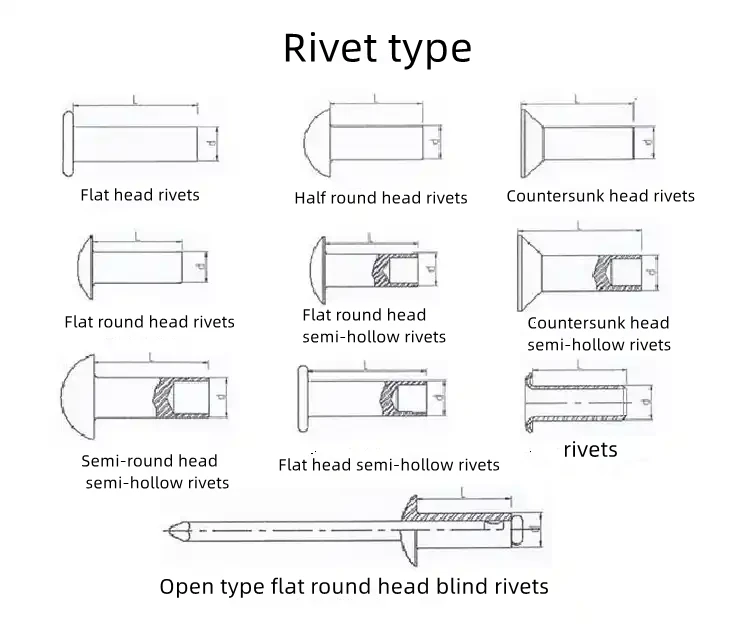
Key Features of Our Pop Rivets
High Strength: The rivets are installed and reinforced by extruding them into a ring shape through the rod and integrating them with the workpiece. They can withstand large tensile and shear forces and have high strength. This makes rivets excellent in applications where high-strength connections are required.
Corrosion resistance: Rivets are mostly made of aluminum alloy, stainless steel and other materials, which can resist corrosion and oxidation well and are suitable for use in various environments. This corrosion resistance allows rivets to maintain stable performance in various harsh environments.
Convenient and fast: The installation of rivets only requires riveting pliers and riveting caps, no additional equipment and auxiliary tools are required. Its installation speed is fast and more convenient than screw fastening.
Wide range of application: Rivets are suitable for various support structures, such as steel plates, aluminum plates, plastic plates, rubber plates, etc., and have a wide range of applications. This makes rivets widely used in multiple industries.
Single-sided riveting: Popular rivets are especially suitable for situations where it is inconvenient to use ordinary rivets (riveting must be done from both sides). They are widely used in construction, automobiles, ships, aircraft, machines, electrical appliances, furniture and other products.
Long History: Rivets have a long history as a connection method. The earliest deformations of metal may have been the ancestors of rivets as we know them today. With the development of metal processing technology, rivets have gradually been widely used in various fields
.
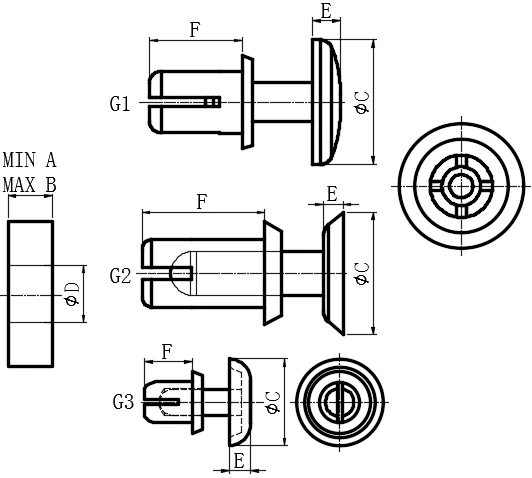
The process flow of blind rivets
Material preparation:
Rivets are generally made of steel with good plasticity and toughness, such as stainless steel, copper, aluminum, etc. According to different uses and needs, selecting appropriate materials also requires preparing various production tools and equipment, such as stamping machines, cutting machines, inspection equipment, etc.
Processing and forming:
Processing and forming is an important part of the rivet manufacturing process, including cutting, stamping, bending, forming and other processes. These processes need to be completed through precise molds and equipment according to the specifications and requirements of the rivets. For example, for solid rivets, the material needs to be cut into blanks of a certain length, and then processed into the required shape by stamping or forging.
Heat treatment:
Heat treatment is an important process to improve the mechanical properties of rivet materials. Through heating, insulation and cooling, the internal structure of the material is changed, thereby improving its mechanical properties. Depending on the material, the heat treatment methods and processes are also different, such as quenching, tempering, annealing, etc.
Surface treatment:
Surface treatment is an essential part of the rivet manufacturing process, and its purpose is to improve the corrosion resistance and aesthetics of the rivets. Depending on the needs, different surface treatments can be used, such as galvanizing, chrome plating, plastic spraying, etc. The rivets also need to be cleaned to remove surface dirt and impurities.
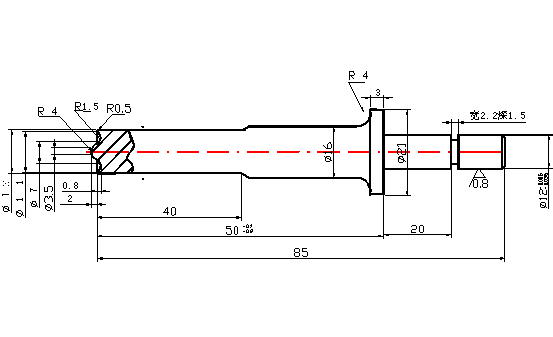
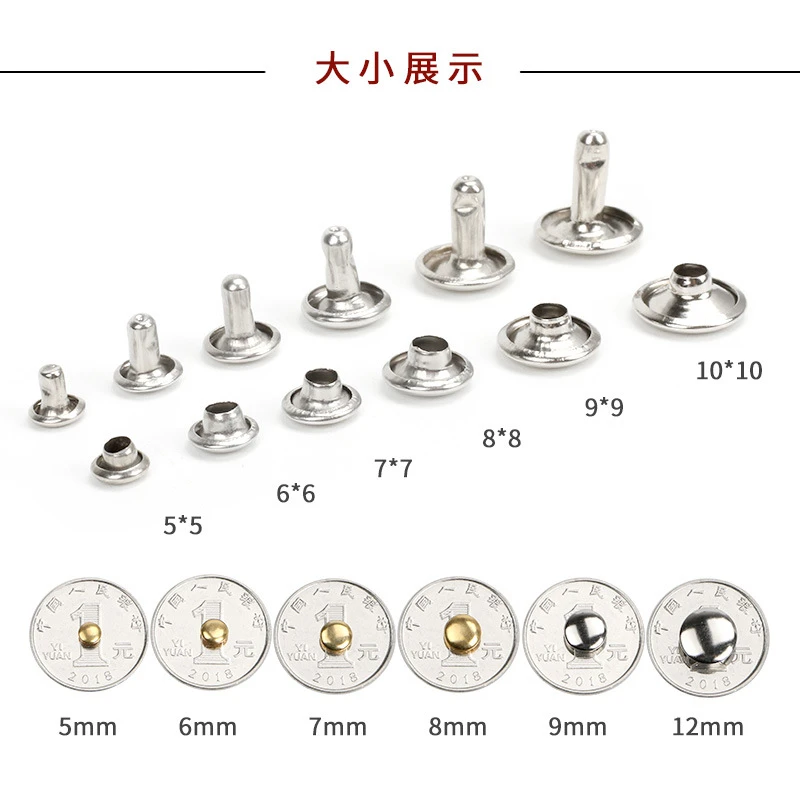
The application scenarios of popular rivets are very wide, covering many fields, mainly including the following aspects:
Automobile Manufacturing: Rivets are widely used in automobile manufacturing, mainly used for the connection of body, door and chassis. Compared with traditional bolts, nuts and other fasteners, rivets have the advantages of light weight, high efficiency in the use of connecting rod materials, improved appearance quality and corrosion resistance.
Aviation Manufacturing: In the aviation field, rivets are used for aircraft shell connections and reinforced component connections. Due to the high performance requirements of aircraft and the harsh operating environment, the quality requirements of rivets are also very high, requiring strict dimensional inspection and mechanical property testing.
Construction field: In the construction field, rivets are mainly used to connect steel structures, especially in the construction of reinforced concrete structures. The use of rivets can reduce damage and impact on the building structure.
Furniture Manufacturing: In furniture manufacturing, rivets are mainly used in the assembly process, such as the manufacturing of chairs, sofas and other products, especially when installing leg brackets. Since furniture needs to be lightweight, strong and beautiful in appearance, the corrosion resistance and appearance performance of rivets need to meet high requirements.
Electronic Equipment: In the manufacturing of electronic equipment, rivets are used in the manufacture of chassis cabinets to fix components such as heat sinks and fans. For example, fan rivets are specially designed for manual installation. They have good toughness, anti-vibration, and noise reduction functions. They are widely used in fixing computer chassis fans and heat sinks.
Other industrial applications: Rivets are also used in many fields such as ships, machinery, and electrical appliances. For example, blind rivets are widely used in products such as construction, automobiles, ships, aircraft, machines, electrical appliances, and furniture. They are especially suitable for occasions where ordinary rivets are inconvenient.
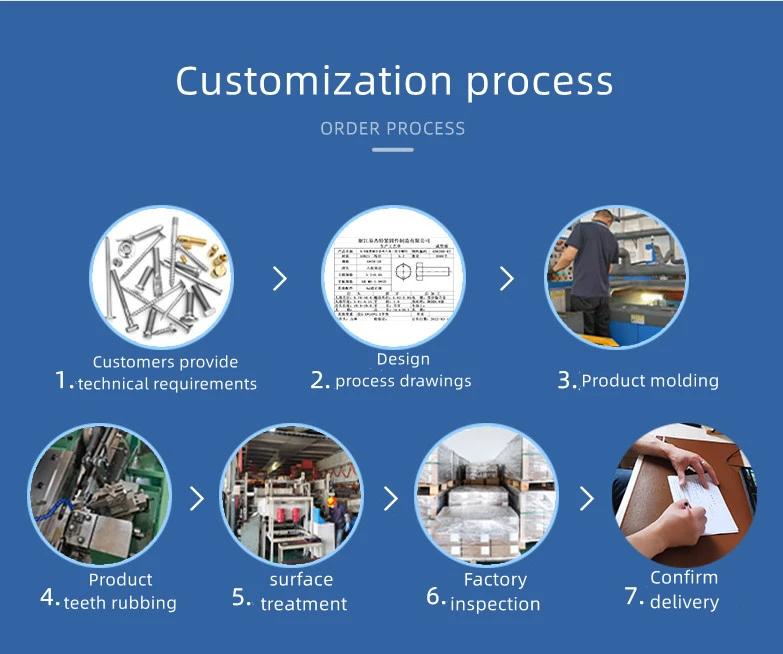
Customized pop rivets
Applications: Designed for specialized applications requiring unique specifications.
Installation method: Customized installation according to specific application requirements.
Benefits: Customized specifications to meet unique project needs, ensuring optimal performance.
Custom Sizes: We offer bolts in standard and custom sizes to meet specific project requirements. Our advanced processing capabilities ensure a perfect fit for your application.
Material Selection: We offer popular rivets made of stainless steel, copper, aluminum and other specialty materials, depending on the application and environmental conditions.
Surface treatment: In order to enhance corrosion resistance and durability, we provide various surface treatments, including galvanizing, chrome plating, plastic spraying, etc. The rivets also need to be cleaned to remove surface dirt and impurities.