



Custom specifications for blind rivets
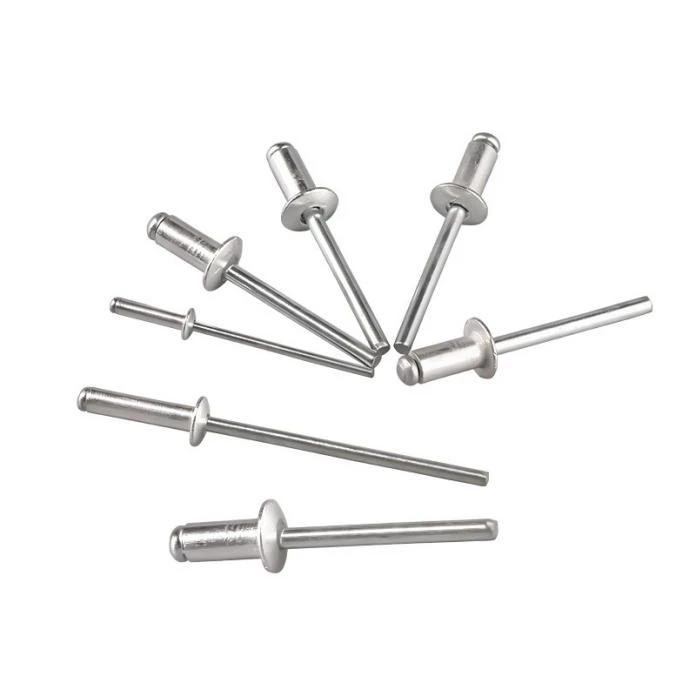
The diameter specifications of blind rivets mainly include the following: 2.4mm, 3.2mm, 4mm, 4.8mm, 5mm, 6.4mm The length specifications of blind rivets are divided into the following intervals: 6 mm, 8 mm, 8.5 mm, 9.5 mm, 11 mm to 15.5 mm, 16 mm, 18 mm, 20 mm.
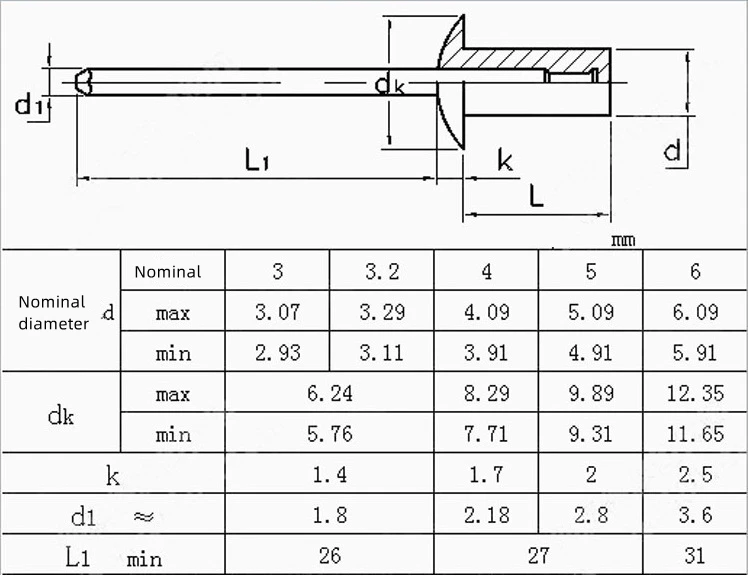
The process for custom blind rivets typically includes the following steps:
Select specifications: Choose the appropriate diameter and length according to your needs.
Provide samples: Provide samples or drawings to ensure that the customized rivets meet the requirements.
Production: Produce according to samples or drawings.
Quality Inspection: Quality inspection is carried out after production is completed to ensure compliance with standards.
Package and ship: Pack and ship after passing the inspection.

 |
 |
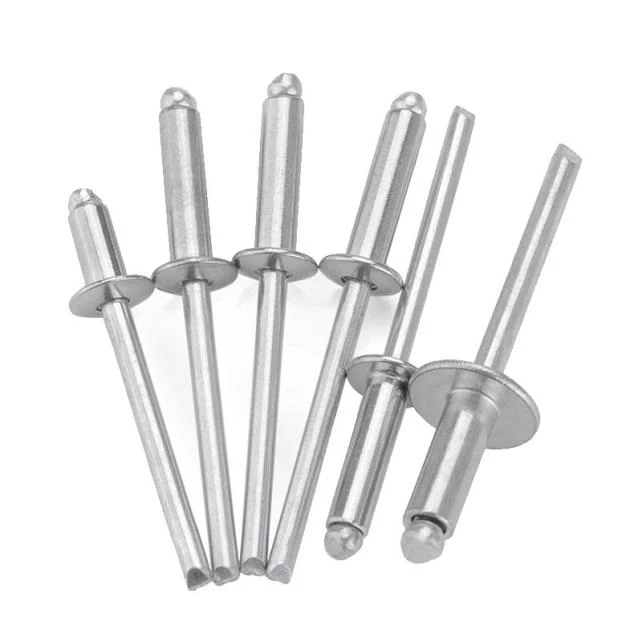
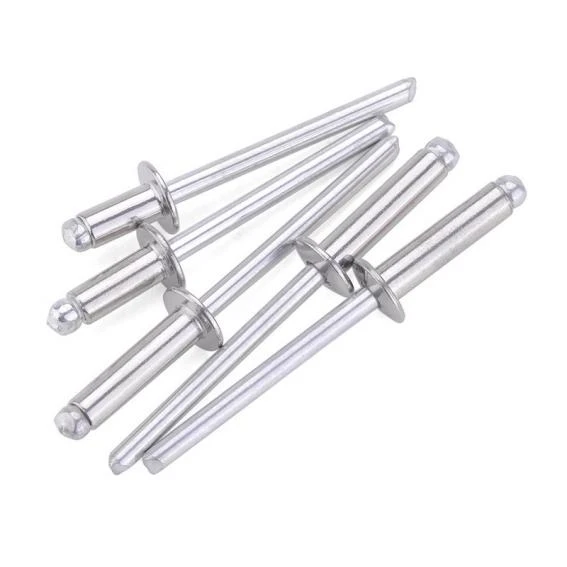
Main features of our blind rivets
High connection strength: Because the core and sleeve of blind rivets are made of metal materials, they have high mechanical strength and load-bearing capacity, can provide strong fastening effects, and are suitable for various heavy-duty or high-vibration equipment. or structure.
2. Easy to operate: The installation process of blind rivets is relatively simple. You only need to insert the nail core into the nail sleeve and then rivet it with a riveting tool. There is no need for tedious operations such as welding or drilling, and it is especially suitable for high-altitude operations or installation in small spaces.
3. Good corrosion resistance: The materials of blind rivets are usually surface treated such as galvanizing and chromium plating. They have good corrosion resistance and can be used in various harsh environments.
4. Wide range of application: Blind rivets can be applied to various materials and thicknesses, such as steel plates, aluminum alloys, fiberglass, etc., and are suitable for various connection forms and structural types.
 |
 |
Types of blind rivets
According to materials, it can be divided into iron, stainless steel, etc.;
According to their uses, they can be divided into ordinary blind rivets, closed blind rivets, etc.;According to the shape of the nail sleeve, it can be divided into open type, closed type, tubular type, etc.
Different types of blind rivets have different characteristics and application ranges.
Can be selected according to actual needs
Application of blind rivets
Blind rivets are widely used in construction, machinery, transportation, aerospace and other fields.
1. In the construction field, blind rivets are used to connect steel plates, steel bars and other materials to improve the stability and safety of the structure;
2. In the mechanical field, blind rivets are used to fix various parts and components to improve the reliability and service life of equipment;
3. In the transportation field, blind rivets are used to manufacture and maintain structural components of various vehicles; 4. In the aerospace field, blind rivets are widely used due to their high strength and corrosion resistance.
Precautions for selecting and using blind rivets
When selecting blind rivets, it is necessary to comprehensively consider factors such as connection materials, thickness, use environment, and load requirements. At the same time, you need to pay attention to the following points during use:
1. Select appropriate blind rivet specifications and types to ensure that actual needs are met;
2. During the installation process, ensure that the environment is clean and dry to avoid dust, water vapor and other impurities from affecting the fastening effect;
3. Check whether the blind rivets are intact before use. If damaged, replace them in time;
4. Install in strict accordance with operating specifications to ensure installation quality;
5. Carry out regular inspection and maintenance during use, and detect and deal with problems in a timely manner.